
All about the History of the Cheese Market
THE CHEESE
In 1395, the city council of Gouda issued detailed regulations for the organization of the Gouda markets. The butter market was located to the east of the town hall, the cattle market to the west. Around 1400, Gouda already appears to have had several livestock and cheese markets.
In the large area surrounding Gouda, dairy farming was the main source of livelihood. This was due to the peat soil, which imposed limitations on other possible uses. Gouda became the center of a large livestock-farming region. Many thousands of kilos of dairy products (and livestock) were traded annually at the Gouda markets. Because of this, and thanks to Gouda’s favorable trading location along the IJssel and Gouwe rivers—serving as a transit port between Rotterdam and Amsterdam—Gouda soon developed into a regional hub for trade in dairy products, among other goods. This is still visible today in the remaining cheese warehouses. Gouda cheese was renowned for its long shelf life and excellent flavor. Even today, cheese farms can be found in the immediate vicinity of Gouda—fortunately, as they fit perfectly with the modern consumer’s desire for authentic, honest food.
Until the sixteenth century, Gouda cheese was still known as (sweet-milk) Stolkse or Stolwijkse cheese. In 1412, the Stolwijk cheese market was moved to Schoonhoven. It was not until around 1500 that clear evidence emerged showing that cheese trade had truly concentrated in Gouda. A long-standing dispute with Schoonhoven over the cheese market was finally settled around 1540 in Gouda’s favor. A few years later, in 1549, there is mention of exports of Gouda cheese to the Antwerp market, where the cheese would go on to gain a dominant position during the 16th century.
THE WEIGH HOUSE (DE WAAG)
The current weigh house dates from 1668 and was designed by architect Pieter Post, who also designed the weigh house in Leiden and the town hall in Maastricht. With this dignified stone building replacing the old wooden one, Gouda’s status as a cheese city was fittingly honored.
The function of the building is beautifully depicted on the relief on the front façade of the cheese weigh house: “the weighing trade in marble,” created by sculptor Bartholomeus Eggers.
Incidentally, the dairy trade had already owned a building on the Market Square since 1611. The former “Great School,” on the site where the beautiful Arti Legi now stands, was then converted into the Butter House (Boterhuis). This trading house for butter, cheese, and dairy products received a new façade in 1616. The Butter House also served as a warehouse for grain and cheese baskets. In 1853, the butter market was moved to the town hall on the Market Square. Both the cheese and butter markets managed to maintain their strong position well into the 19th century. Walking through the city, you could smell the scent of cheese, usually coming from one of the many cheese warehouses.
Until just before the Second World War, the city and market scene on market days was defined by farmers and traders—but also by farmers’ wives, who accompanied them to do their shopping in town or at the goods market. On the market, deals between farmers and traders—often directors of large export firms—were sealed with the traditional hand clap. Many transactions also took place in one of the surrounding cafés, where, at the seller’s expense, a drink was shared to celebrate the deal.
THE CHEESE MARKET TODAY
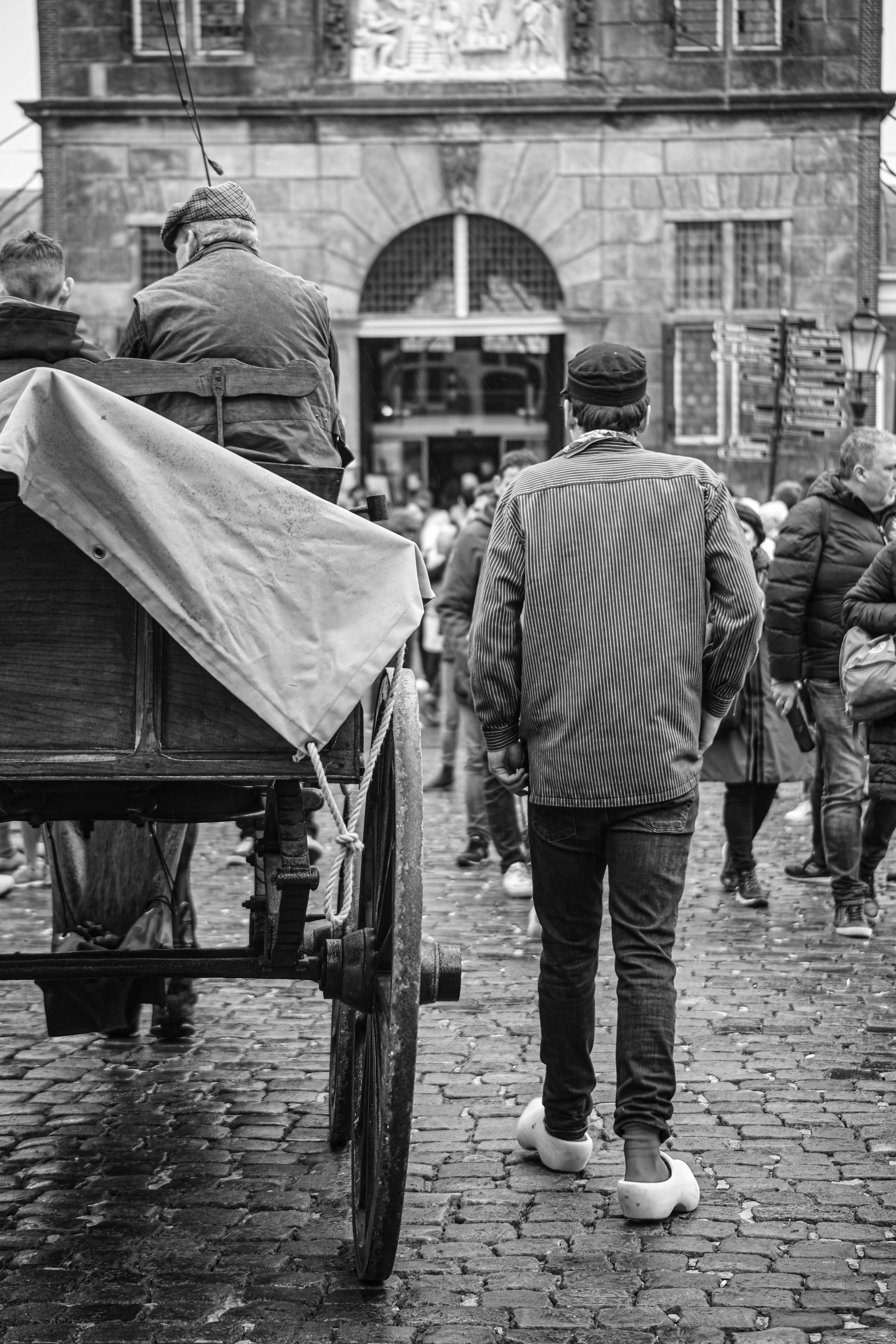
Until 1987, the cheese market still served its original purpose. Nowadays, the buying and selling of cheese at the market is cherished by tourists as a delightful spectacle—a touch of nostalgia in the most authentic setting imaginable.
"Say cheese, and you say Gouda" is a slogan from before slogans even existed. Wherever in the world you go, simply saying the name Gouda brings a smile to people’s faces: “Cheese!” 🧀